We are excited to announce the first night of talks in the NYC Systems series in 2026! Talks are agnostic of language, framework, operating system, etc. And they are focused on engineering challenges, not product pitches.
We are pleased to have Yihao Sun and Peter Boncz speak, and glad to have Trail of Bits as a partner for the venue.
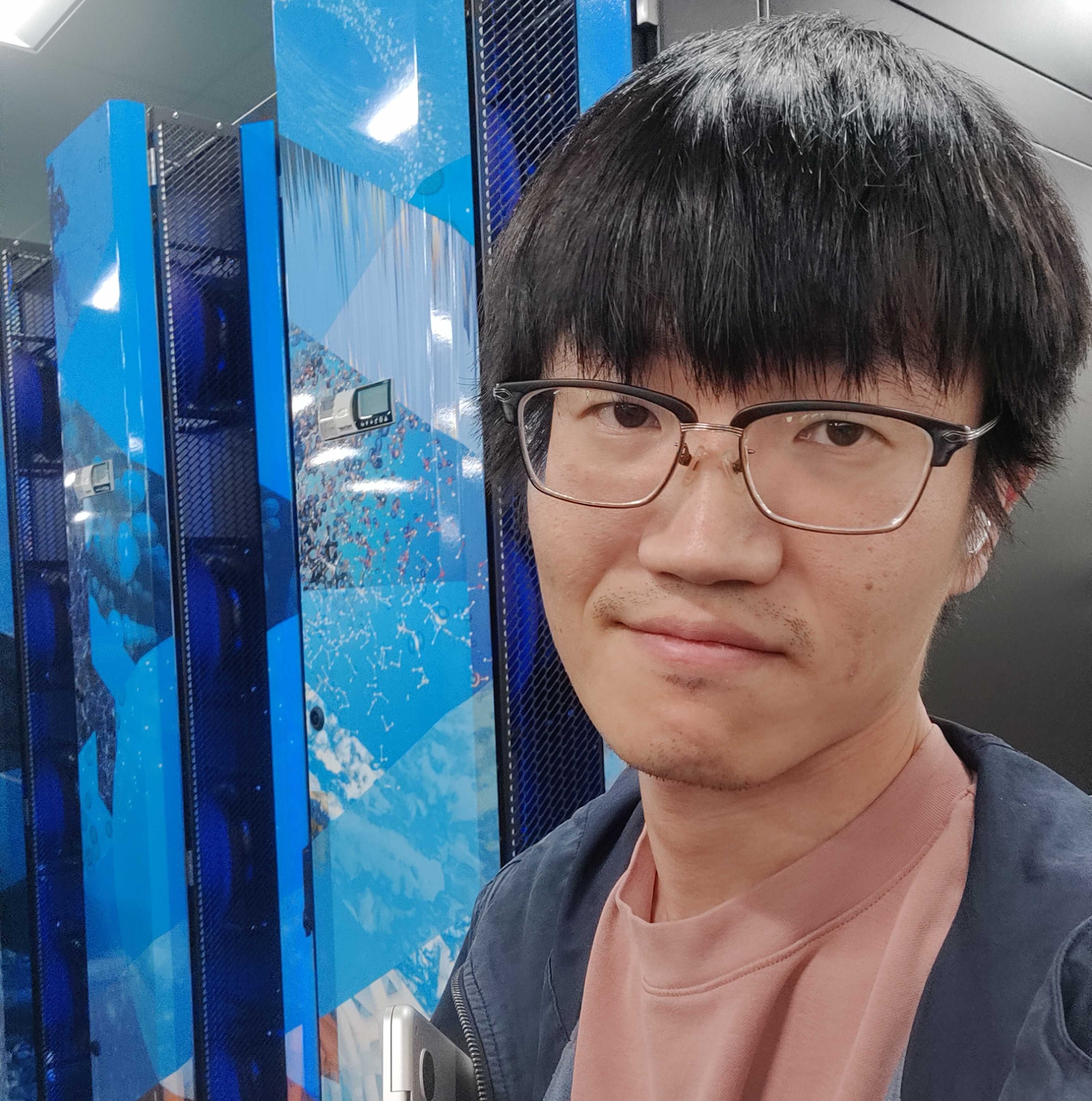
Yihao Sun is a PhD candidate in Computer Science at Syracuse University, advised by Prof. Kristopher Micinski. His research attempts to lowers the barrier to parallel computing in data intensive domains by unifying Programming Languages, High Performance Computing and Database. He worked on Datalog, a declarative query language increasingly used in PL and AI and extend it both semantically and architecturally to support advanced analyses and scalable execution on GPUs and distributed systems.
His work spans: (1) high performance Datalog engines for HPC, (2) semantic extensions for static analysis and neurosymbolic reasoning, and (3) a unifying framework reconciling fragmented Datalog features. Several research papers appear in VLDB, NeurIPS, ASPLOS, CLUSTER, and AAAI and his code have been deployed and tested at DOE’s supercomputers.
Datalog has seen renewed interest for program analysis and neuro-symbolic AI in recent years. Scaling Datalog engines to support large input datasets for real-world program analysis tasks is performance critical. GPUs offer massive parallelism and high memory bandwidth, but their SIMT execution model conflicts with Datalog's recursive, irregular computation patterns. In this talk, I present our journey building GPU Datalog engines, the core challenges we faced and the solutions we developed.
I begin with the background knowledge for GPU programming paradigm and Datalog's performance bottle neck and introduce the motivation for running Datalog on GPU. I then describe our published work, GDlog and VFlog, which use materialized binary joins with fine-tuned GPU data structures. This approach is a natural fit for GPU bulk operations and achieves high throughput for merging but suffers from intermediate result explosion and struggles to scale for large Datalog projects like DDisasm.
I then introduce our ongoing work on SRDatalog, a compiler-based engine that generates specialized GPU kernels for worst-case optimal joins using an iterator-based approach. I conclude with lessons learned and open challenges in adapting worst-case optimal algorithms to GPU architectures.

Peter Boncz holds appointments as tenured researcher at CWI and professor at VU University Amsterdam. His academic background is in database systems, with the open-source column-store MonetDB the outcome of his PhD. He has a track record in bridging the gap between academia and commercial application, founding multiple startups. In 2008 he co-founded Vectorwise around the analytical database system by the same name, which pioneered vectorized query execution, and lightweight data compression; which have been adopted broadly in analytical database systems.
Recent work to make data (de)compression data-parallel and AI/GPU-friendly led to the FastLanes data format. In recent years he has collaborated closely with both Databricks and with MotherDuck — a startup that is connecting DuckDB to the cloud. DuckDB originates from the Database Architectures research group, which he leads at CWI (the Amsterdam research institute where also python was created).
Managing vector data entails storing, updating, and searching collections of large and multi-dimensional pieces of data. Some believe that this justifies the creation of a new class of data systems specialized for this. Others would contend that such systems would eventually need to provide services provided by database system, including e.g., transaction management, role-based access control, and integration of vector search predicates in complex queries.
Recent research (PDX - Partition Dimension Across) has shown that already highly optimized vector search kernels can profit from columnar storage. This talk gives a sneak preview of our ongoing work in this area, including optimized vector ingest, tailored vector indexing, and integrated evaluation of queries and vector predicates in the DuckDB system.